How a Handmade Business Owner planned for her best sales ever. Episode 328
Jul 14, 2026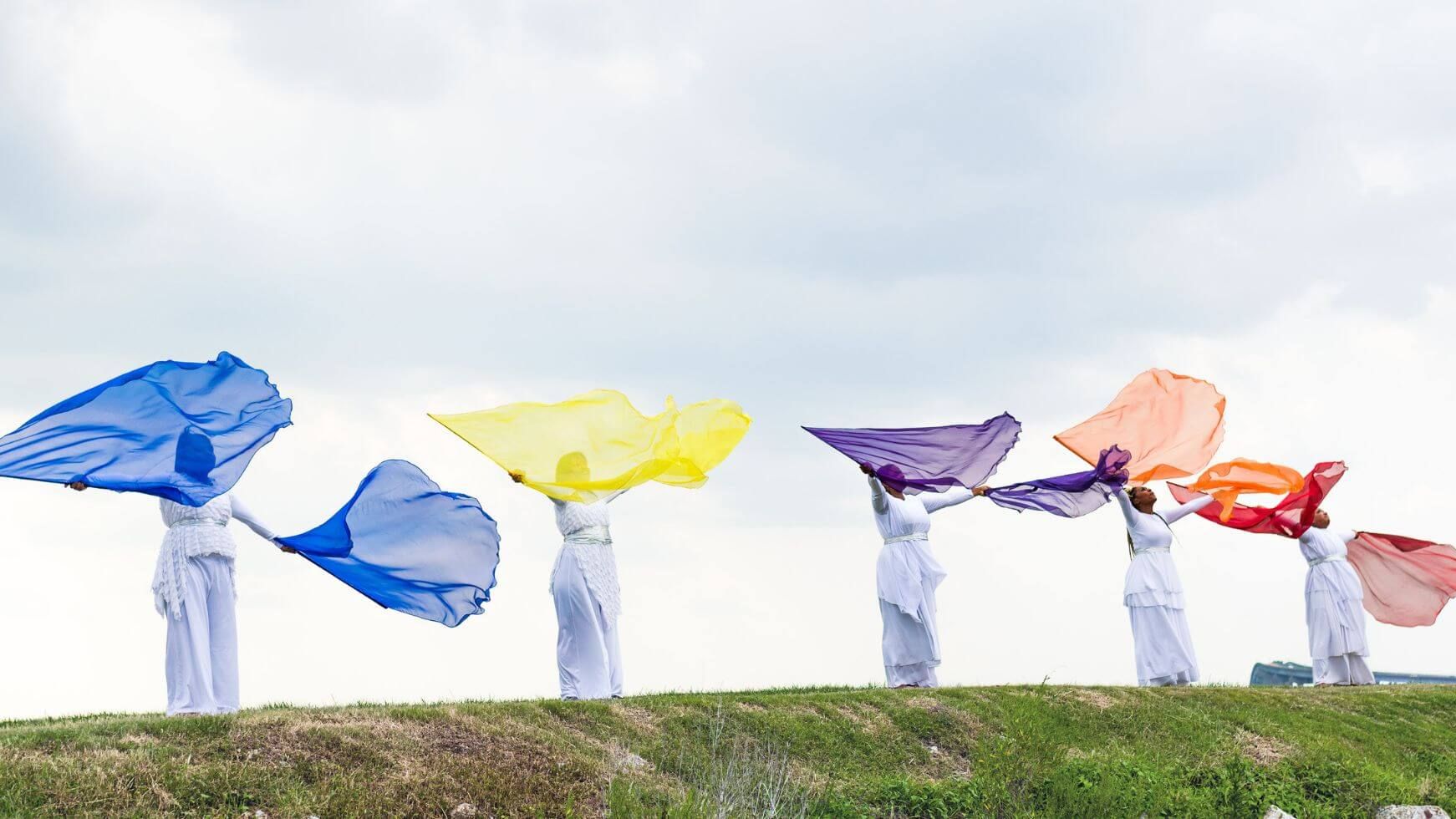
She Was Ready to Set Her Business on Fire. Here's What She Did Instead.
I've known Andrea York for a long time. We're basically growing old together at this point, and I mean that in the best way. She's been one of our Inner Circle members since almost the beginning, and I've had a front row seat to something I think a lot of you will recognize: the moment a business owner goes from frustrated and stuck to finally, truly free.
Andrea runs Catch the Fire Worship Flags, and if you've never heard of worship flags (I hadn’t) they're handmade dance flags used in churches as a form of creative, expressive worship. Andrea likes to describe it as color guard, but for church. It's a beautiful, visual product, and it's also about as niched as a niche can get. Even inside the Christian goods industry, most people have never seen a worship flag and wouldn't know what to do with one if they had.
Andrea started this as a passion project back in 2011. Fifteen years ago, if you'd told her this was still going to be her business, she'd have laughed. It was supposed to be filling time until the "real thing" started. Instead, it became her primary source of income since 2013, and over fifteen years, it's allowed her to donate more than $250,000 to causes and missions she cares about. That's always been her rule: revenue comes in, giving goes out first, and the rest runs the business.
Here's the thing about Andrea's business that made it special and also made it really, really hard: it was completely handmade. By her. In her house.
With a sewing machine going and rolls of fabric behind her on every single Zoom call. And that's exactly where this story starts to get interesting.
Her Lowest Quarter Ever
Last year, Q1 was the worst revenue quarter Andrea had ever had in fifteen years of business. When I asked her what was happening, her answer was simple and honest: she'd given up.
Not on the business exactly, but on showing up for it the way it needed her to. January is normally slow, that's just how it goes, but you don't stop doing the work in January because you know February is coming. In the Inner Circle we talk about needing to keep filling the bucket, and Andrea just wasn't filling it.
So she did what a lot of us do when we feel stuck. She scrambled. She started discounting to try to pull her existing customers back to her store, which felt like it was working because she was getting nearly a 50% returning customer rate. She actually used to think that was a great number, until she learned in the Inner Circle that it's not. It means you're cannibalizing your own list instead of replenishing it. Eventually you run out of people to sell to twice.
She was also making emotional decisions instead of tough ones. As a maker, her identity was completely wrapped up in the product. She didn't think of herself as an emotional business owner, but almost every decision she was making that quarter came from a feeling, not a fact.
The Conversation in Cancun
Andrea and I had a very direct conversation at a mastermind retreat in Cancun about what she actually wanted for her business, including the fact that she wants to sell it one day. I'm a pretty direct person, and Andrea left the conversation mad. She cried. She's not a crier, so that told me something landed.
She spent the next couple of days processing it with other members at the retreat, and it was actually another member, Jen Schindler, who asked her the question in a way she could finally hear it: "Is this a business you would want to buy?"
Andrea's answer was immediate. Heck no.
She did not want to buy a job, and that's exactly what she'd built. A job that required her to physically be in the room every single day, folding, sewing, shipping, unable to leave for more than a week without customers going elsewhere.
I think this is the part so many of you need to hear. Andrea has been doing this longer than almost anyone in our community. The idea of walking away from fifteen years of work felt like a massive personal failure. It's not rational, but it's real, and if you've ever felt that pit in your stomach thinking about starting over, you already know exactly what she was feeling.
Making the Business Sellable
The wake up call in Cancun happened in January. By February, tariffs changed everything. Andrea is Canadian, but 90 to 95% of her sales come from the US, with only 3 to 4% from Canada. She had to get her products into the US, and she had to do it fast, or she risked losing almost her entire business.
That forced urgency ended up being a gift. She found a 3PL warehouse literally thirteen minutes from her door, just across the border. For two weeks straight, she drove her inventory across, over $800 worth of goods at a time, until every product was in place and shipping without her. The time savings weren't even huge, maybe a couple of hours a week. What changed was the mental load. She described it as weight coming off, being able to bounce around a little more instead of feeling permanently tethered to her sewing room.
With shipping off her plate, she could finally look at the next problem: production.
Cutting It Down to What Actually Sells
If Andrea wanted a business someone else would want to buy, she couldn't keep making somewhere between 129 and 185 different products by hand. So she cut her SKUs by 87%, down to 22 bestsellers.
That was a hard decision to actually execute, even once the numbers made it obvious. Every one of those discontinued products felt like one of her babies. Her instinct was that people deserved more choice. But the truth is,
if you're doing your job as a business owner and bringing in new traffic, there's always a fresh audience that hasn't seen your bestsellers yet. You don't need 185 options. You need the right 22.
Alongside the SKU cut, she ran down her physical inventory, over 300 pieces at the time, to about 55 today. And these aren't $25 items. Her average order value so far this year is $175, up from $151, so we're talking about a real dollar value sitting on shelves while she worked through the transition.
Letting Go of the Fabric
This is the moment that made me the proudest of Andrea, honestly. She was sitting on about $7,000 worth of raw fabric, material she estimated represented roughly three more years of sewing if she kept going the way she'd always gone.
She asked herself a simple question: what is my time worth for three years? Is it $7,000? Her answer was no, she's worth more than that. So she calculated exactly how much product she'd need to make to break even on the material cost, made that amount, and donated the rest. She got a tax receipt for the fabric she gave to public and private schools with home economics programs and to a few theater companies. Some of it she just threw out.
She used to have about 30 cubbies of fabric filling a room, plus a huge desk of materials. Now she has six cubbies left. If you've ever held onto inventory because it feels like throwing away money, I want you to sit with that for a second.
Andrea let go of $7,000 in raw materials because she finally valued her own time more than the sunk cost sitting on her shelf.
Solving the Real Problem
Here's where Andrea did something I see very few business owners do well: she figured out the actual problem she needed to solve, instead of just chasing more sales.
She'd already built something that was working, an engaged, loyal audience who genuinely liked her content. Her issue wasn't traffic and it wasn't her audience. Her issue was conversion, and she knew it.
Her product requires education. People need to understand what a worship flag even is before they'll consider buying one, whether it's biblical, how it's used, what to do if their own church doesn't use them yet. A generic 10% discount doesn't move someone who doesn't even know if they want the product yet. It only works on someone who's already decided to buy.
So she built three top of funnel flows around the three questions people actually Google about worship flags. She turned those into beautiful PDFs and nurture sequences, and she noticed something important: people who converted through this path bought more training, not just the flags themselves. Her digital training product was only $49, well below her AOV, so she started bundling it with visual product training, and conversion improved.
Then she rebuilt her challenges. She'd been running free, live challenges for a while, drawing two to three hundred genuinely engaged people into a group each time. And they weren't buying. She was giving away great information, but she wasn't taking anyone anywhere.
So she restructured her challenges into a four part journey across the year: Foundation, Encounter, Prophetic, and Warfare. Each stage builds knowledge and naturally introduces the next product someone needs. She spends $12 a day on ads with a goal of 300 new subscribers per challenge, and she only invites people who are actually progressing through the stages, never the ones who already know her well. Her goal was a 5% conversion rate on that group. She hit 4%, compared to about 0.3% on her website overall. That's the difference between a strategy and a hope.
Growing a List Without Paying For It
On top of the challenge funnel, Andrea started using ManyChat tied to scheduled social posts through Metricool. Every day, she offers one of her lead magnets through a simple comment trigger, and the whole thing runs quietly in the background.
Between March and April alone, her list grew by 2,000 people, all organic. Her goal for the year was to grow from 10,000 subscribers to 13,000, and she's sitting at around 12,000 with six months still to go.
Falling Back in Love With the Business
By Q4, Andrea's highest revenue quarter ever followed her lowest revenue quarter ever, and the difference wasn't luck. Q1 was the mental shift. Q2 and Q3 were the work of putting the systems in place. Q4 was where she got to see the payoff.
But the real change isn't just in the numbers. Andrea is no longer shipping anything herself, and she's nearly done manufacturing entirely.
Between March and June this year, she traveled more than she ever has, working minimally off her laptop instead of grinding to get ahead of orders before a trip and then drowning in catch up work when she got back.
She told me a two week holiday used to cost her two months, the month before and the month after. That's gone now.
She's also showing up more for her husband and her kids, and she said something that stuck with me:
when your business consumes you completely, you have nothing left to give to the people and things you actually care about.
Having a plan and being in control of it doesn't just protect your revenue. It gives you your life back.
Why the Mastermind Actually Works
What Andrea found indispensable about the Mastermind was sitting at a table with other women who have real success in ecommerce, being able to hear how someone else brainstorms through a problem that isn't even her own, and realizing her problem is just a challenge to figure out, not a dead end.
She looked at other ecommerce coaching programs and found most of them selling more content. What she needed wasn't more content from one person. It was strategy, perspective, and honesty from twenty four different businesses that all look completely different from each other.
That's actually the whole philosophy behind how I coach. I'm not teaching one method. I'm helping each person get clear on where they actually are, where they want to be, and building the plan to close that gap. I learned this the hard way in my own first business, twenty years of spinning in circles, assuming I was good at selling and that everything else would just work itself out. It doesn't. When I bought Wee Squeak, I told my accountant straight up that I wanted to sell it in five years for a specific number, and I asked him to show me what that had to look like. That was the start of strategic planning for me, and it's the same approach I brought to Andrea's business.
Andrea built her own version of this with what she calls her big rocks: the two or three things she was actually allowed to work on. For her, that was product, production, and increasing AOV. Notably, she chose not to chase conversion directly, because that number kept declining as her traffic grew, which is actually normal. Instead she focused on getting more value out of every visitor she already had. That's a subtle but important distinction, and it's a big part of why her strategy worked instead of adding more noise to an already busy plate.
Where Andrea Is Headed
I asked Andrea what her business looks like if she wakes up a year from today. Her answer: running on autopilot. A business she'd be at peace selling to someone else, because she'd actually want to buy it herself.
She's looking forward to working just 10 to 15 hours a week, adding fuel to what's already working instead of reinventing anything.
That's rinse and repeat, built on a foundation she spent the last two years constructing on purpose.
If any part of Andrea's story feels familiar, the discounting, the exhaustion, the identity wrapped up in a product you built with your own hands, I want you to hear this clearly: the fix usually isn't more hustle. It's figuring out the actual problem you're solving, building a plan around it, and getting honest with yourself about whether the business you have is one you'd actually choose to buy.
If you want to see what Andrea's built, go check out her beautiful flags at catchthefireworshipflags.com. She's on every social platform under the same name, and she's every bit as generous in person as she was on this podcast.
RELATED LINKS:
Andrea's Business: Catch the Fire Worship Flags
Get on the Inner Circle waitlist here: https://www.thesocialsalesgirls.com/inner-circle-membership
From stressed to confident. An inside look at a 2 year transformation https://www.thesocialsalesgirls.com/blog/from-stressed-to-confident-an-inside-look-at-a-2-year-transformation-episode-227
The one thing even smart Business owners continue to get wrong https://www.thesocialsalesgirls.com/blog/the-one-thing-even-smart-business-owners-continue-to-get-wrong-episode-174
Strategies from my Mastermind [part 1] https://www.thesocialsalesgirls.com/blog/growth-strategies-from-my-mastermind-part-1-episode-151
Strategies from my Mastermind [part 2] https://www.thesocialsalesgirls.com/blog/growth-strategies-from-my-mastermind-part-2-episode-152