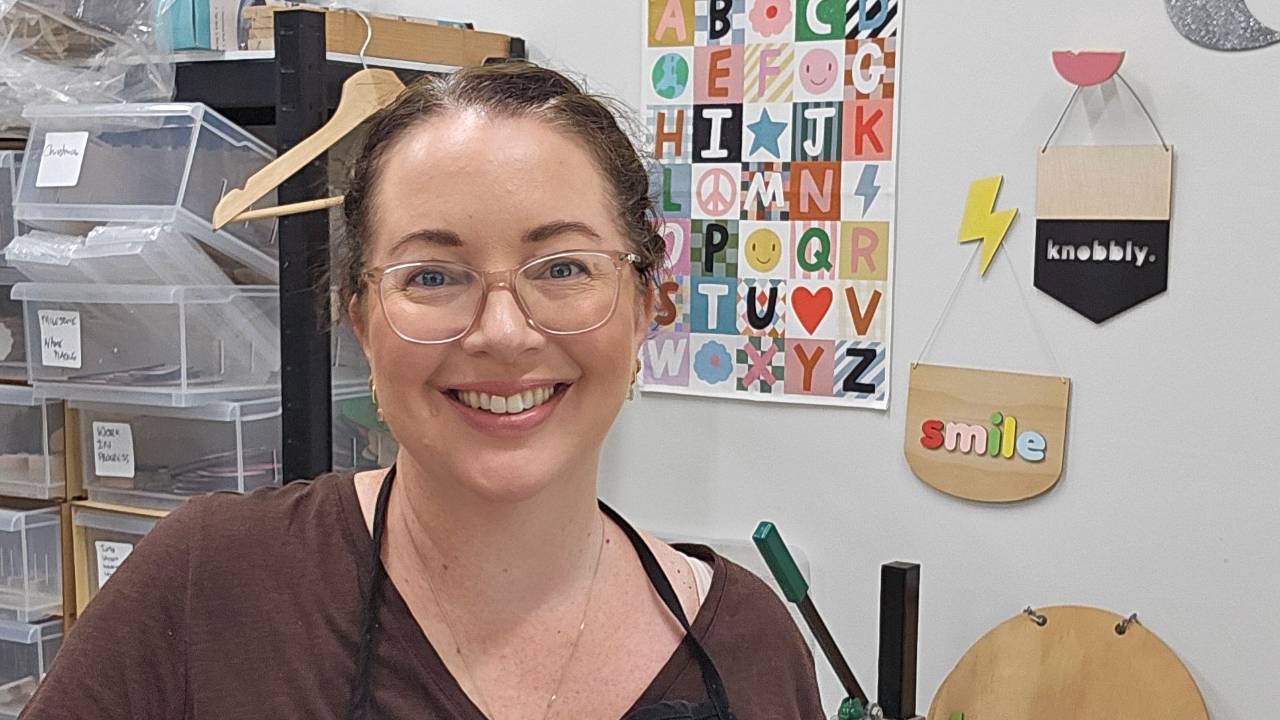
This store owner grew her list by more than 1600 names - and you can too. Episode 336
Sep 08, 2026
She Turned 1,610 Strangers Into 34 Customers Without Spending a Dime on Ads
I want to share a conversation that made me want to do backflips in my office.
For more than a year, I had been nagging one of my own coaches, Tina, about something. I have this theory that in the Inner Circle, we have over a thousand store owners all working incredibly hard, building their own little silos. They're building their own audience, their own list, their own traffic, all on their own. And right next to them, in the very same community, there might be someone with a nearly identical customer who they've never even spoken to.
It drives me a little nuts, honestly.
So a year ago, Tina told me she was going to spend the year doing one collaboration a month with other store owners, just to see what happened. I finally sat down with her to look at the results, and what she found changed how I talk about list growth completely.
The Small Business Excuse I Hear Every Single Day
Before I get into her numbers, I want you to know exactly who Tina is, because I think you're going to see yourself in her.
She runs a fair trade home decor shop. It's about three years old. She started from zero, just like every one of us does. No list, no social following, nothing. And she is busy. Not "I have a side hustle and some free time" busy. She's our member success coach, she talks to hundreds of members, she manages our coaching team, and she has two kids.
Here's how she described her actual marketing time.
"If I'm lucky, I squeeze in 30 minutes to an hour a day, but realistically, I don't even do that most of the time."
More than half of her products are drop shipped, which means she's also buried in customer service and order fulfillment on top of everything else. If you've ever told yourself you don't have time to grow your list, I want you to sit with that quote for a second.
Earlier in the year, Tina had reread “The One Thing”, and she decided her one thing for the year would be growing her email list. Her reasoning was smart. Her store is heavily weighted toward Q4. If she built her list steadily starting in January, she'd have a real audience to sell to by the time the holidays hit.
"I don't wanna spend a lot of money to do it, so I'm gonna use collaboration as my way to grow my list for the year."
That single decision is what this whole episode is built around.
Why Her First Collaboration Almost Talked Her Out of the Strategy
Tina's first collaboration wasn't even with an Inner Circle member. It was with a blogger who covered fair trade products and had already featured her items. Tina reached out, and the blogger invited her into a group giveaway with a handful of other brands.
It was easy. All Tina had to do was post about it on social media. But the results taught her something important. She didn't control the experience, so she didn't control the follow up email flow. And it took the blogger a full month to send over the list of leads, which meant those leads were already cold by the time Tina got them.
That one experience is exactly why the next nine collaborations she ran were all with other Inner Circle members. Same training, same framework, same understanding of how the pieces fit together. No explaining required.
Over the course of the year, she ran two different types of collaborations. The first was a joint giveaway with a store that shared a similar audience but sold different products, matched on price point and aesthetic. Each partner contributed a prize, split the ad spend, promoted to their own list and social following, and split the technical setup so both businesses got the marketing pixel data they needed. It's the most complex version of a collab we teach, and if you're an Inner Circle member, the full step by step training lives inside the collaboration section.
The second type was simpler. Around the holidays, Tina teamed up with three other brands for what we call a gift guide collaboration. No ads, no shared photography, just a shared Google Doc with each brand's elevator pitch, a product photo, and a link. Everyone agreed on one universal discount code, everyone emailed their own list, and everyone posted on social. It was built purely to drive direct sales close to a gifting occasion, and it worked.
The Year End Spreadsheet That Made Her Eat Her Words
Here's the part I love. For most of the year, Tina wasn't convinced any of this was working.
Her giveaways were bringing in anywhere from 100 to 300 new subscribers each time, and honestly, that felt underwhelming to her. She got in her own head about it. She has a small business with a small list, and 200 new names didn't feel like the kind of dramatic result that makes you want to shout from the rooftops.
I had to practically beg her to pull together a year end case study so we could actually look at the data instead of her gut feeling.
"I sorta had to backtrack on my moaning about it because it was actually quite successful."
When she finally added it all up, here's what a full year of monthly collaborations actually produced.
She collected 1,610 email addresses. If you think about what it typically costs to acquire a lead intentionally, somewhere around 50 cents each is a solid benchmark, and plenty of stores pay more than that. That's roughly 1,600 leads Tina never would have gotten otherwise, or $800 in acquisition costs she never had to spend.
She got sales from every single one of her ten collaborations. Including the ones run with genuinely tiny businesses.
She generated 34 unique new customers, and those customers placed 42 total orders. That's already repeat business showing up within the same window.
With an average order value between 40 and 45 dollars, that's roughly 1,600 dollars in sales. Her total spend across the entire year of collaborations was around 100 dollars. That puts her customer acquisition cost somewhere around three to four dollars per customer, which is remarkably cheap compared to what most of us pay to acquire a first time buyer through paid ads.
She also suppressed 849 of those leads, unsubscribing anyone who had received six emails without ever opening one, which kept her list clean and her engagement metrics honest.
The Lesson Hiding Inside Her Numbers
Here's what really struck both of us. A few of Tina's collaboration partners reached out after their giveaways to check in, and more than once, they asked her directly if a specific person had bought from her. When Tina looked that customer up, the answer was almost always yes.
"That's my number one customer. She'll buy anything I put out there, and I bet she'll buy from you."
That's the real prize hiding inside these collaborations. It's not just the raw lead count. It's landing even one or two true superfans, customers who reliably buy again and again, because the lifetime value of a single one of those customers can outweigh an entire giveaway's worth of effort.
Tina also learned something about patience that I think every store owner needs to hear. A week after a giveaway would end, she and her partner would check in, and almost nobody had used the discount code yet. It felt like a flop in the moment. But the sales showed up months later, once those leads had been nurtured and were actually ready to buy. When Tina revisited one of her earliest collaborations from March a full year later, it had generated five separate orders from that single list.
That's also why, when she repeated a collaboration this year with the same partner around Earth Day, the raw number of new leads was smaller. The lists had already overlapped once. But fewer, warmer, more relevant leads were still worth it.
"It's not always about the volume of leads. It's about the quality."
Why Your Small List Isn't the Problem You Think It Is
I know exactly what's running through your head right now. Your niche feels too small. Your list feels too tiny. Your price point doesn't match up with anyone else's.
Tina hears all of this constantly, and none of it held her back. In her gift guide collaboration, every partner had a different price point, and they simply agreed on a flat 15 percent discount that worked across every store. Nobody needs identical products. They need customers who genuinely care about similar things, because every one of us buys both high end pieces and dollar store finds depending on the day.
And your list size doesn't need to match your partner's either. This isn't about even trades. It's about two businesses each bringing their own audience, their own cold traffic through a small ad spend, and letting the results speak for themselves.
"It doesn't cost a lot, and it takes some time, but it's repeatable. You can set this up and do it again and again."
That's the whole point. This isn't a one time trick. It's a rinse and repeat growth engine you can lean on every single year.
Your Next Step
If Tina's results tell you anything, it's that you don't need a massive following or a big budget to make this work. You need a proven product, a partner who shares your kind of customer, and a plan you can follow more than once.
That's exactly why we built the Collaboration Hub inside the Inner Circle. It's a searchable directory of members who are looking for partners just like you, all working from the same training, all speaking the same language, so you skip the guesswork and get straight to results. If you're already a member, go check it out and get listed. If you're not yet, head to the show notes and get on the wait list so you can see it for yourself.
RELATED LINKS:
Get on the Inner Circle waitlist here: https://www.thesocialsalesgirls.com/inner-circle-membership
The formula for an easy Collaboration you can do this month https://www.thesocialsalesgirls.com/blog/the-formula-for-an-easy-collaboration-you-can-do-this-month-episode-215
Organic Sales: Don't miss these 2 strategies https://www.thesocialsalesgirls.com/blog/organic-sales-dont-miss-these-2-strategies-episode-282
A step by step plan to double Louise's email list https://www.thesocialsalesgirls.com/blog/a-step-by-step-plan-to-double-louises-email-list-episode-303