She Started with $4K and a Dream. Episode 320
May 19, 2026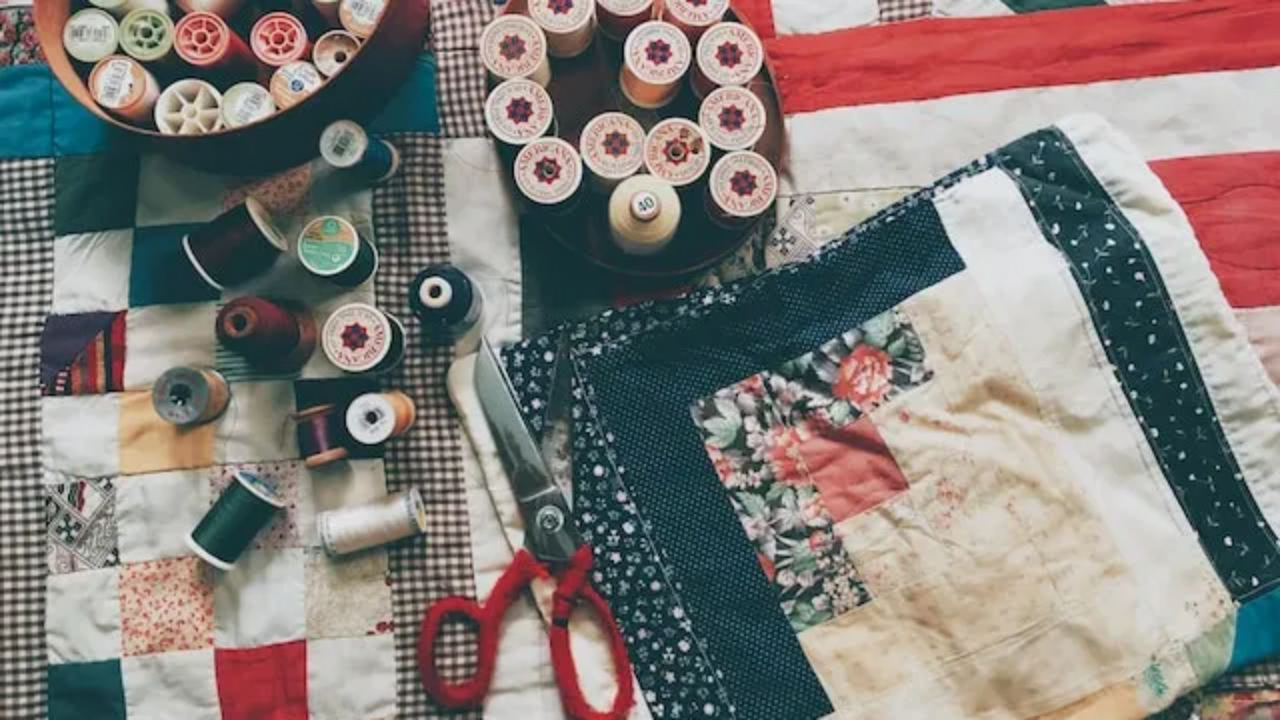
She Started With Two Subscribers and $4,000. By Year Two, She'd Hit $110K.
Becky Youngberry built a quilting subscription box while working full-time, managing her mental health, and figuring it out as she went. Here's what actually moved the needle.
Becky Youngberry started her quilting subscription box with two subscribers, $4,000 from savings, and a really bad day at her day job. By year two, she'd hit $110,000 in revenue, putting her in the top 5% of independent ecom startups.
On the podcast, Becky and I chatted about what it actually takes to build recurring revenue while working full time, why knowing your profit numbers must come before chasing growth, and how she manages her mental health while building a business she loves.
This one is for every store owner who's figured out how to make sales and is now trying to figure out how to make it sustainable.
From Two Subscribers and a Dream to the Top 5%
Becky is a quilter. And I mean a real one. Her grandmother taught her to hand quilt at the dining room table when she was a kid, using cardboard templates because rotary cutters weren't even a thing yet. Becky grew up, got busy with life, and set quilting aside for years. Then in 2014 she walked into a fabric shop in Townsville, Queensland, joined a patchwork group, found her people, and her “thing”.
By 2018 she was teaching that class. By 2023 she was running a subscription box.
She went looking for an Australian patchwork subscription box and couldn't find one. So she sat on the couch with her husband one night after a rough day at her government job and said, "I think I wanna try this." They figured out what they could afford to lose, pulled $4,000 from savings, and she committed $200 a fortnight from her own wages for a year to cover the basics.
Her first two subscribers were friends. That's it. That's the launch story. No big strategy, no six-figure ad budget, no viral moment. Just a woman who knew her craft, saw a gap, and decided to go for it.
Two years later, she hit $110,000 in revenue. In the top 5% of all independent ecom startups. In her second year of really running it.
So what did she actually do? Let's get into it.
Growing Fast Is Not the Same as Growing Well
Here's the thing about subscription businesses. You've got recurring revenue coming in every month, subscribers are signing up, boxes are going out the door. It can feel like things are working really well.
But Becky is the first to say it: she didn't have a clear handle on her actual dollar profit per box.
It's incredibly common. When you're building fast and wearing every hat in the business, the thing that tends to slide is the math. The granular, what-does-each-box-actually-make-me number. And if you don't know that number, you can't know how many subscribers you actually need to hit your income goal.
For Becky, the goal is clear. She wants to leave her government job. She wants her time back. She knows she needs approximately $2,000 a month to cover household bills once the mortgage is paid off. That's the number. And the question is, how many boxes a month gets her there?
If her profit per box is around $30 after cost of goods, packaging, and subsidised postage, she needs roughly 250 active subscribers to hit that number. That's a very specific, very achievable target. But she couldn't aim at it until she did the math.
Subscriber count is a vanity metric if you don't know what each subscriber is actually worth to you. Percentages are a vanity metric too, for that matter. Your expenses aren't a percentage. They're dollars. So your profit needs to be in dollars too.
Your action step:
Pull your cost of goods, packaging, and shipping for your top product. Calculate the actual dollar profit, not the percentage. Then do the math: how many units a month do you need to reach your target income? Write that number down and put it somewhere you can see it.
More Options Is Not a Strategy. It's a Stall.
When Becky and I looked at her subscription lineup together, here's what a potential customer was looking at: three different tiers at different price points, plus multiple payment plan options within each tier. That's a lot of decisions to ask someone to make before they've even hit the checkout.
Becky had built out the extra tiers in response to customer requests and some marketing advice she'd picked up along the way about the power of offering three options so the middle one looks most attractive. And that logic isn't wrong, in theory. But in practice, it was making her inventory planning a nightmare and splitting her marketing attention three ways.
When you have three subscription tiers, you have to forecast inventory for three different configurations, months in advance. Becky orders fabric six months ahead. If she's guessing at three different subscriber counts across three different box sizes, there is a lot of room for error. And excess inventory doesn't just sit there looking innocent. It's just boxes of dollar bills sitting on the shelf.
Meanwhile, her most popular box outsells the other two combined, by far. That box deserves all of her attention. All of her marketing energy. All of her inventory planning focus.
The cleaner your offer, the easier it is to market, manage, and sell. And when you have one hero product you're driving people toward, you can start to create real scarcity and urgency around it. Limited spots this month. Wait list open for one week only. That is a powerful thing to be able to say. You can't say it convincingly when you've got three different boxes all technically available all the time.
Your action step:
Look at your current offers. Which one sells the most, has the best margin, and is easiest to fulfill? Make that your focus. Then ask yourself honestly whether the other options are genuinely serving your customers, or just adding complexity for everyone, including you.
Do the Right Work. Find Your "Who" for Everything Else.
Becky read “The One Thing”. She tracks her data in a playbook every month. She uses Metricool to schedule her social media so it's off her plate. And she's actively working toward handing off her bookkeeping to someone who can take it off her list entirely.
She is not doing everything. She is doing the right things, and she is finding tools and people to handle the rest.
This is not a small distinction, it’s truly the whole game.
“I can't multitask. If I try to multitask, all I do is multiple things really badly. Pick your one thing and do your one thing — today, this week, this month — and look after yourself.”
You are not a bookkeeper. You are a business owner. Those are two different jobs. And the goal isn't to do your own bookkeeping forever. The goal is to get yourself out of the doer seat and into the manager seat, where you're reviewing the numbers instead of wrestling with them. It might cost you an extra $200 a month. But what it buys you is time. And right now, for most of you, time is actually your most limited resource.
Your action step:
Make a list of the tasks that eat your time but aren't in your zone of genius. Pick one. This week, find your "who," whether that's a tool, a VA, a scheduling app, or a service that can take it off your plate.
She's Not Trying to Build an Empire. She's Trying to Build a Life.
One of the things I loved most about talking to Becky is how clear she is on why she's doing this.
She's not trying to build a company she'll sell for seven figures. She doesn't need to replace her full government salary. She just needs enough to cover the bills, pay herself, and have her time back to do the work she actually loves, including getting out to regional Queensland to teach quilting to women who don't have access to a local teacher or a quilt shop. She lights up when she talks about that. That's the dream.
And to get there, she has a date. July 1, 2027. That's when she wants to walk into her government job and have a conversation about taking long service leave with a view to not coming back.
That's a real goal with a real deadline. Not some far-off "someday." A specific date on the calendar.
That kind of clarity is not something you stumble into; it takes some honest conversations with yourself about what you actually want. But when you have it, every business decision gets easier. You know what you're working toward and why.
Her Best Year Started With Slowing Down
2025 was intentionally a stop-and-learn year for Becky. She pumped the brakes on growth, worked on getting her systems right, started really tracking her data, and focused on building her foundation before scaling.
She still hit $110,000.
I think about that a lot. Because so many people in our community are pushing hard to grow, sometimes before they've put in the groundwork that actually makes growth sustainable. And what Becky's story shows is that when you slow down and do that foundational work, the growth often comes anyway. And in a way that doesn't break you.
She joined Reliable Revenue this year for the first time. She's tracking her data every month. She's looking at her email flows, her conversion metrics, her inventory. She's building the assets that will let her step on the gas confidently when the time is right.
That is the smarter path. It's not always the flashiest one, but it works.
Start With $4,000 and a Dream. Just Have at It.
Here's what I want you to take from Becky's story.
You don't have to have it all figured out. You don't have to have the perfect product, the perfect website, or the perfect plan before you start. Becky started with $4,000, two subscribers, and a craft she loved. She figured the rest out as she went.
But she also did the work. She tracked her numbers. She found her community. She invested in learning. She made decisions based on data, not feelings. And when something wasn't working, she didn't blow everything up and start from scratch. She stayed the course and problem-solved her way through it.
That work ethic is the thing that separates the stores that make it from the ones that don't. The willingness to show up, do the work, and keep going even when it's taking longer than you hoped.
Becky's goal is to be having conversations with her employer about leaving by the end of 2026. We're going to check back in with her in six months. I cannot wait to hear where she is.
RELATED LINKS
Check out Becky’s business at https://blackcatquiltco.com.au
Get on the Inner Circle Waitlist: https://www.thesocialsalesgirls.com/inner-circle-membership
The One Thing by Gary Keller and Jay Papasan: https://the1thing.com/book/
Inventory Genius by Ciara Stockland: https://www.ciarastockeland.com/book
Who Not How by Dan Sullivan and Dr. Benjamin Hardy: https://whonothow.com/
Metricool (social media scheduling): https://metricool.com/