How Jen got 320 New Customers. Episode 334
Aug 25, 2026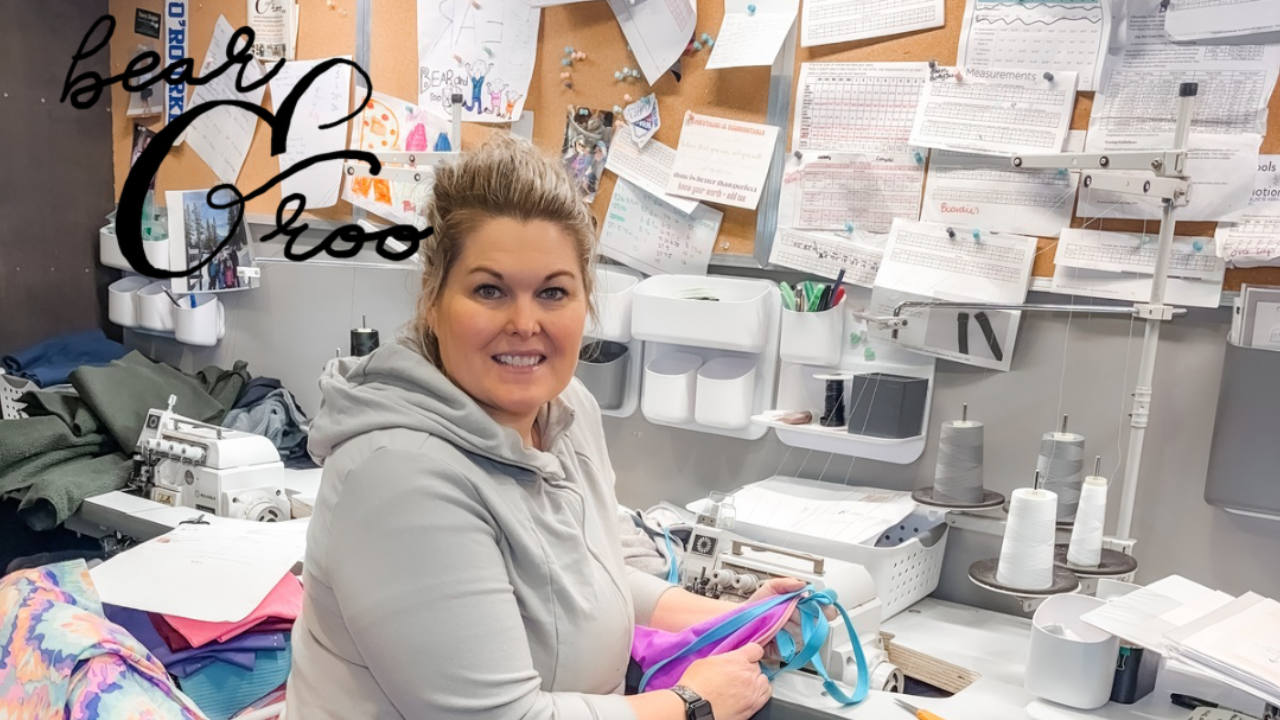
The Had an 80% Return Customer Rate. That Was Actually Her Biggest Problem.
Jen O’Rourke has been a member of the Inner Circle for two years. She shows up, she does the work, and she shares her progress more generously than almost anyone I know (she might be a little Inner Circle-famous). About a year ago, she came on the podcast for what was really a coaching call in disguise — episode 264, if you want to go back and listen. Since then, her business has transformed, and when she posted about it in our private group recently, I knew I had to bring her back.
I'm sharing her story for two reasons. One, it's genuinely inspiring. And two, I want it to normalize all the noise that goes on in our heads — the doubt, the spiraling, the conviction that something's broken every time a month doesn't go perfectly. Because here's the thing about Jen: her business is thriving right now, by every measure. And she still had a month this summer where she wondered if she should quit. Keep that in mind as you read this.
Jen runs Bear and Roo, a made-to-order womenswear business she's built from her own basement studio over 11 years — no manufacturing team, just her, one part-time helper who cuts fabric a few hours a day, and now her teenage daughter, who took a summer job with the family business. Women pick their own sizes, features, and fabrics, and Jen makes every single piece herself. It's a multi-six-figure business. She delivers tens of thousands of dollars in orders every month. And she's paid herself a teacher's wage since year three. No loans, ever, not personal and not business. Just profit, reinvested carefully.
So when Jen tells you something worked, it's worth paying attention.
The Metric Everyone Would Envy Was Actually a Warning Sign
When Jen first joined the Inner Circle, her business looked healthy on paper. Eighty percent of her customers came back for a second purchase. Most business owners would kill for that number. But
here's what an 80% returning customer rate actually tells you: you're probably losing new customers faster than you're gaining them, and the only way to keep growing is to keep inventing new things to sell to the same loyal group.
That's exactly what was happening to Jen. She kept releasing new products, sourcing new fabrics, building new patterns — constant extra work just to keep her existing customers engaged. It was working, in a sense. But it wasn't sustainable, and it wasn't growth.
So a year ago, we made a decision together: instead of chasing every metric, Jen was going to track one thing, every single month — new customer acquisition.
The One Product She Talked About Over and Over Again
Jen didn't just start running ads and hope for the best. She picked what we call a "hero product" in the Inner Circle (the one item that would do the job of acquiring new customers) and she made her entire funnel repeat that same message. The ad featured it. The welcome flow featured it. The abandoned cart emails featured it. Anyone encountering Jen's brand for the first time saw the same product, over and over, instead of a scattershot tour of everything she makes.
That's a mental shift a lot of business owners struggle with. We all want to show people everything we have to offer. But Jen had already tried that approach and lived through a busier, harder version of her business because of it. This time, going into her second year with our Reliable Revenue program, she said it was a no-brainer . She understood exactly why repetition mattered, and she rebuilt her welcome flow and abandoned cart around it in the first week.
She also did something a lot of business owners are afraid to do: she made trust part of the sales process itself. Because Bear and Roo doesn't accept returns, her emails now tell hesitant customers to simply reach out with their measurements, and Jen answers personally.
"By having that chat box on Shopify, it allowed me to say, 'Let me help you.'"
That single habit — treating a stalled cart as an invitation to have a real conversation, not a lost sale — has become part of how she converts customers who are otherwise nervous about buying custom clothing sight unseen.
320 New Customers, 662 Orders, and a Number That Explains Everything
So what happened after a year of this focus?
"Since April 1st, I have gained 320 new customers that had joined my community. And of those 320, they had purchased 662 orders with an average of $222."
That's not 320 one-time buyers. A lot of them came back for second, third, even fourth purchases. We can actually see this reflected in Jen's return customer rate. It's dropped from that alarming 80% down to around 50%. That sounds like a step backward until you understand what it actually means: her business isn't relying on the same small group anymore. She's built a real, growing pool of customers, and they're sticking around.
Her welcome flow, tied to the pop-up on her site, now converts at almost 5%, more than double the typical 2% average. Out of every 100 people who land on her list, four to six become buyers. That's the compounding effect of showing the right people the right thing, consistently.
Behind all of this was also a quieter operational fix: Jen consolidated her fabric sourcing down to three or four reliable suppliers (a lot of it now made in Canada, riding the wave of the "Made in Canada" movement), instead of juggling a pile of vendors and a mountain of invoices every month. Less paperwork, less chasing, more time actually making the product… which is what generates the revenue in the first place.
Why She Fixed Her Website Before She Spent a Dollar on Ads
Before Jen ever touched an ad account, she rebuilt her website. She knew her site had been built around the needs of her loyal 80%, and that new visitors were finding it hard to navigate. So she worked one-on-one with our coach Tina, meeting monthly for a stretch, specifically to get someone else's eyes on it, someone who didn't already know the business the way Jen did. She also went through smaller lessons, including one from our coach Kate focused specifically on homepage conversion.
Only after that groundwork was in place did Jen invest in Reliable Revenue, our deep-dive email marketing program, to build out the welcome flows and abandoned cart sequences. And only after that system was live did she start running ads. Every dollar she spent on traffic was landing on a site and a funnel that was actually built to convert it, which is exactly why the results compounded the way they did. She has one customer, by the way, whose lifetime value is close to $40,000. That customer was never the problem. The unconverted cold traffic was.
Her Best Month in 18 Months …And the Month She Wanted to Quit
Here's the part I really want you to sit with.
In June, Jen had her best month in a year and a half. Everything was clicking — the ads, the emails, the customers. Then July arrived, and her first three weeks felt like a disaster. She assumed she'd broken something. She started second-guessing every recent change she'd made.
"I could quit. I'm gonna quit tomorrow."
That's what she told her coach Tina on the phone, mid-slump. That's what the mental spiral of entrepreneurship does to you. And Tina's answer was simple: not yet.
Here's what we found when we actually looked at the numbers together, before we recorded this episode: Jen's July wasn't down against last July at all. Every metric was up, sometimes dramatically. July and February are historically the two weakest retail months of the year for businesses like hers. Nothing to do with anything she'd done. And she still brought in 32 new customers in a slower month, with her biggest fall release still to come.
The actual culprit turned out to be something almost mundane: Jen had recently widened her email segment from customers who'd engaged in the last 60 days to those who'd engaged in the last 90. More people were getting emailed, but a chunk of them were colder, so her open and deliverability numbers dipped slightly, even as her total reach grew. It wasn't broken. It was math.
"It's a huge mental game. I think that's part of why people are entrepreneurs — they must enjoy feeling that way, because they put themselves through it, and then they get back out of it, and then they go back into it."
That's the piece I want every one of you reading this to hold onto. A business can be objectively, measurably thriving — money in the bank, no debt, steady growth, a healthy site, a kid on payroll — and you will still have a month where you convince yourself it's all falling apart. That's not a sign something's wrong with you, it's just what running a business with real skin in the game feels like sometimes.
What She'd Tell Herself Two Years Ago
I asked Jen, off the cuff, what she'd tell someone standing where she was two years ago. Her answer didn't hesitate.
"I would be my worst enemy. I would second-guess everything. I would try to do too much... So I would say: join a program, join a coach, join something that you can have that support through."
She told me she's an "answer person". When she can't figure something out, she needs someone to help her land on a decision, rather than spiraling in her own head. That's exactly what coaching gave her: Tina for strategy and conversion, Kate for landing pages, Melissa for organic marketing, whose lessons Jen still revisits every year, a decade in. Only about half of our Inner Circle members actually take advantage of one-on-one coaching. Jen is one of the ones who does, consistently, and it shows.
So what's next for Bear and Roo? More of the same, deliberately. Jen isn't chasing extreme growth. She wants to keep acquiring new customers without hiring a manufacturing team, because staying small and handmade is the whole point of her brand. She built a cabin this year and actually got to spend the summer there, laptop in hand, because her systems now run without her chained to a sewing machine.
That's the real win. The revenue, yes, but also the freedom that came from building it methodically, one problem at a time.
If you want to hear Jen's original story, go back and listen to episode 264. And if her results feel like proof that this works, take that seriously — she made and sells expensive, made-to-order leggings, one of the hardest categories to build trust in online, and she's still built a business with real income and real flexibility. Whatever your product is, that possibility is there for you too.
RELATED LINKS:
Check out Jen’s store at www.bearandroo.com
A 10 minute check up you should do today https://www.thesocialsalesgirls.com/blog/a-10-minute-checkup-you-should-do-today-episode-157
What to do when you need new Customers https://www.thesocialsalesgirls.com/blog/what-to-do-when-you-need-new-customers-episode-263
How Melissa reduced her cost of acquiring a customer by 44% https://www.thesocialsalesgirls.com/blog/how-melissa-reduced-her-cost-of-acquiring-a-customer-by-44-percent-episode-191
Do you even know what it costs to get a new customer? https://www.thesocialsalesgirls.com/blog/do-you-even-know-what-it-costs-to-get-a-new-customer-episode-187