Brandon doubled his sales AND cut ad spend by 90%. Episode 315
Apr 15, 2026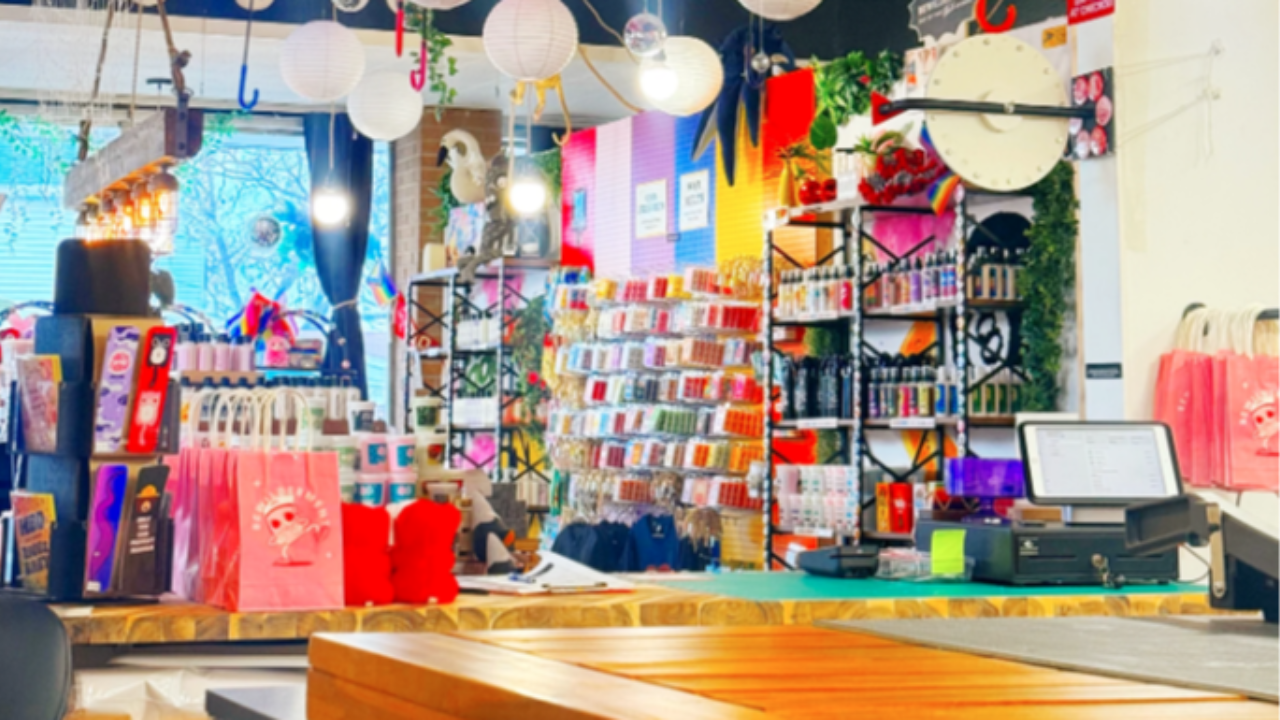
Most Businesses Would Have Broken. He Doubled Sales Instead.
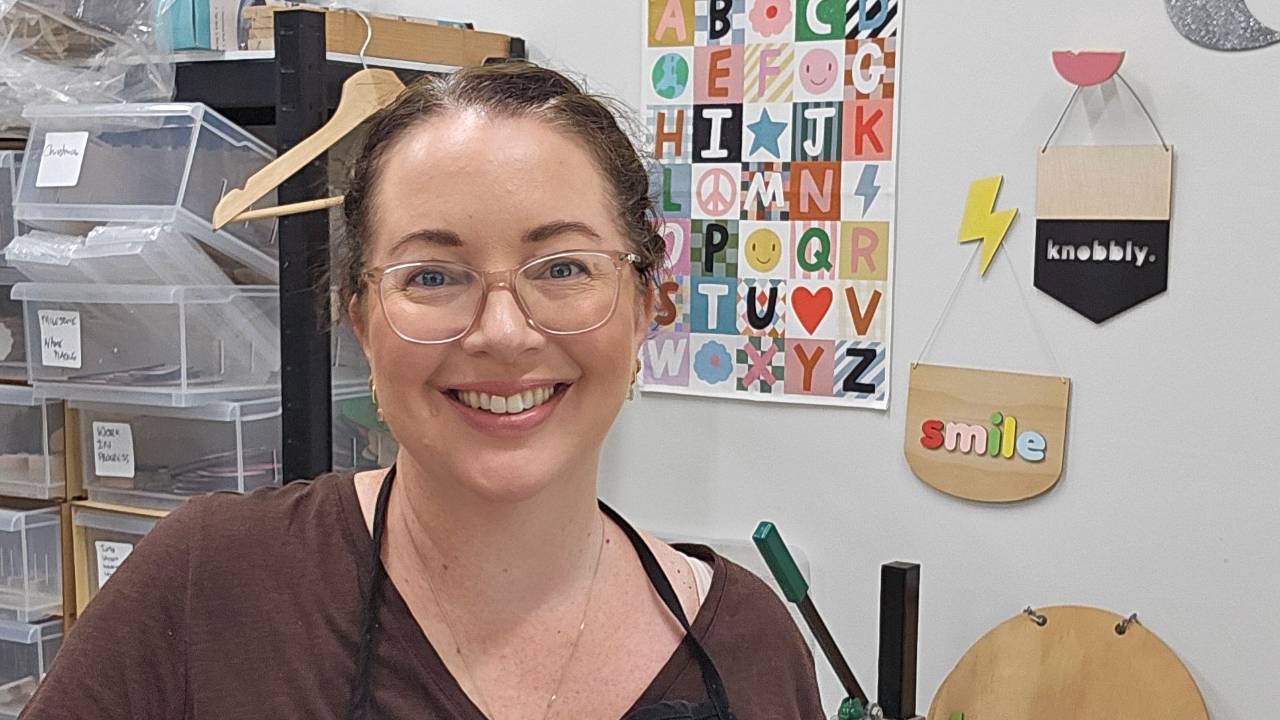
When Brandon Love joined the Inner Circle, he had already built something most people never do — a real, lasting business. Bewilderment.com is a fragrance and art studio in Columbus, Ohio, now in its 11th year. Brandon started it at 17. He's grown it to a team of six, a brick-and-mortar studio, a wholesale presence on Faire, and a loyal online following built around one of the most distinctive brand identities you'll find in the product space.
But last year was supposed to be even bigger. Brandon came into it with a clear plan to triple his sales. Then tariffs hit. With a large catalog and a lot of products, the cost landscape shifted overnight — and the strategy he'd been relying on for nearly a decade suddenly stopped working the way it used to.
Despite all of that, Brandon didn't just survive the year. He doubled his sales.
Here's how he did it.
The Problem: A Cracking Foundation
For nine years, Facebook ads had been the engine of Bewilderment. They drove new customers in, and Brandon's Facebook group, Bewildered Buds, kept those customers coming back. It was a system that worked…until it didn't.
Algorithm changes hit the group. Tariffs restructured his cost of goods. And the ad performance that had felt reliable started sliding. Brandon was spending $19,000–$22,000 a month on Meta ads and getting a 2.2x–3x ROAS on a good month. December 2024 had been a 5x or 6x. Early 2025 started strong at around 4.5x. But then something shifted, and for most of the year the ROAS hovered around 2.5–2.6 and he couldn't figure out why. Friends who also ran Meta ads were experiencing the same thing.
"I came to you almost in tears," he said. "Is this it? Ten years and I'm out? What do I do?"
From Broadcasting to Belonging
When Brandon joined the Inner Circle and started working through the courses, one thing hit him immediately: he had a massive, valuable email list — and he was completely ignoring what it could do.
Every Friday for ten years, he had sent the same email to everyone: here's what we have, please buy it. The problem wasn't the frequency. It was the vagueness. Bewilderment sells to wildly different people — witchy and spiritual customers, Dungeons & Dragons fans, politically passionate buyers, fragrance collectors, art lovers. And every single one of them was getting the same generic message.
As a creative, Brandon knew he was holding back in his copy on purpose — getting deliberately vague to avoid alienating anyone.
The result was emails that felt broad and impersonal, like a mass retailer rather than the deeply specific, passionate brand Bewilderment actually is.
Working with Inner Circle coach Claudia, Brandon built out email segmentation based on past purchases. If you'd bought from the witchy collection, you were in that segment. No quiz needed — the purchase itself was the signal. Within segments, he went even further, separating customers who had already subscribed to a particular box from those who hadn't — so he could speak to each group differently.
"I started treating the audiences as individual markets," Brandon said. "World-changing."
In a single one-hour session, she went into Klaviyo and built out the initial segments at a speed Brandon described as "magical." She asked if she could take control, built out the framework, and left him with both the segments and a taste for what was possible. He's been building them out for everything ever since.
The Copywriting Behind the Emails
Getting the segmentation right was only half the equation. The emails themselves needed to speak directly and authentically to each audience, which meant investing in the writing.
Brandon is a longtime fan of copywriter Laura Belgray and her business Talking Shrimp. He'd read all her books and taken her courses himself. When it came time to hand off email writing to his assistant, he invested in the same training for her. Now his assistant handles virtually all of Bewilderment's email, trained in the same voice and approach Brandon had developed over years.
The one exception: a plain-text email from Brandon himself, sent once or twice a month when a segment needs a boost — say, to recruit new subscribers to one of the boxes. Those personal, direct emails consistently outperform everything else, so he keeps them rare on purpose.
"I don't touch Klaviyo except for those," he said. "I don't want to abuse it."
For store owners who feel they can't afford dedicated help: Brandon shares his assistant with another Inner Circle member. Two businesses, one resource, split between them — and it works.
The Revenue Engine: Subscription Boxes Built on Segments
Once the segments were in place, the next move was natural: build subscription boxes for the ones with the most passionate, repeat buyers.
The witchy/spiritual subscription box launched first. Within three months, it added roughly $7,000 a month in recurring revenue — from a segment that already existed, full of customers who had already proven they loved the product. Then came a political box. A wax melt box. A D&D box is in testing.
The formula is disciplined: Brandon waits at least three months between launches, checks whether customers in that niche are buying two and three times (not just once), looks at how those products perform in-store and on Faire, and stays honest about the possibility of killing a box if the numbers don't support it.
"I can already tell the D&D box might not come to market," he said. "And I'm completely okay with that."
The subscription boxes have also changed the internal rhythm of the business in a practical way. Brandon sets all subscription billing to go out on the 15th of every month. That creates a predictable mid-month influx — what he calls a "bingo free space." The bills for that week are always covered. Production gets planned in advance. The scramble-to-survive energy that ran quietly in the background for ten years has been replaced by something calmer.
And there's a production efficiency built into the model too. Every month, Brandon makes an overabundance of that month's box. Anything left over gets sold as singles the following month. One production run effectively covers two separate restock events — the subscriber shipment and a follow-up restock for non-subscribers.
"I've never had this in ten years," he said. "I will never go without a subscription box again."
The Ad Math, Then and Now
Before the Inner Circle: $20,000–$22,000/month on Meta ads, 2.2x–3x ROAS.
After: $2,300–$2,700/month on Meta ads, 7x–8x ROAS — with a portion of that spend going toward giveaway lead generation rather than direct purchase campaigns, meaning the purchase-focused campaigns alone are likely returning 10x–14x.
The giveaway has actually been Brandon's front door for eleven years: sign up for a monthly $100 prize drawing, stay subscribed to stay eligible. What's new is how intentional the funnel behind it has become. New subscribers get a 50% off offer on day two, built into the margin. Their first purchase determines which segment they enter. From there, the relationship deepens.
"Once you buy once from us," Brandon said, "odds are you're buying twice."
With a customer lifetime value of $200–$300 and an acquisition cost of around $3, the economics are now working in his favor rather than against him. And because so much revenue is now coming directly from email — at least matching what the ads used to produce, and that's before counting subscription box revenue — the profit picture looks completely different.
Going Over Everyone's Heads
The tariff situation also forced a supply chain reckoning that turned out to be a significant win. Brandon broke up with every supplier he'd used for the previous nine years and went directly to their suppliers — the actual source — for everything.
It took hustle. He describes reaching out and essentially saying, "Hi, I'm not as big as those guys yet — but I'd love to be your friend." And it worked. Now instead of ordering through a middleman, he's ordering at the scale his previous suppliers were ordering at. He's getting jug-sized quantities of oils, bulk trays, and raw materials at supplier pricing.
The result is not just lower costs but higher production capacity. Where he used to make 200 wax melts at a time, he's now making 600. And with a significant portion of each run pre-sold through subscriptions, the risk of overproduction is minimal.
The Content Discovery
One of the unexpected wins from the Inner Circle was a shift in how Brandon thinks about organic content.
He had convinced himself that Reels and TikTok were the only things worth making — and since he doesn't love making them, he was making very little content at all.
When the course walked him through auditing his actual social media performance, he saw something he hadn't expected: his static posts and written content were outperforming everything else. He'd been dismissing an entire content format because he didn't have the data in front of him to see it was working.
In January and February, he went all in on static posts — images of stickers, art prints, products — and they generated around $15,000 in new customer sales in those two months alone. Posts were getting 500 to 1,000 shares. Factor in a $200–$300 customer lifetime value, and those two months of static content likely represent around $40,000 in long-term revenue from new customers who came in through a format he'd been ready to abandon.
Now, when a piece of content performs well, it guides the creative. A sticker that did well became a wax melt, then a candle, then a fragrance. He'll repost the same strong image two weeks later against a different background or in a different setting without apology. Content that works gets used — repeatedly and unapologetically.
"There's gold in them mines," he said. "Your course showed me how to measure that."
The Business Behind the Business
What makes Bewilderment's story worth paying attention to isn't just the tactics. It's the intentionality behind how the whole thing is built.
Brandon pays everyone on his team within $5 per hour of what he makes himself. Sick pay is real. PTO starts on day one with no strict tracking — use it how you need to. Holidays keep getting added. People come in and ask, "Wait — we get what?"
The long-term plan is to eventually sell his stake in the company to his employees. Not to a corporation, not to a private equity firm — to the people who built it with him.
He'll look at whatever portion of the company he genuinely feels he owns and sell that to the team when the time comes.
The cultural shift that came with this philosophy has been significant. Before, even when the business was doing millions in revenue, there was a distance. He wasn't in the group chats, wasn't at the potluck, wasn't invited to birthday parties — because he was the boss. That didn't feel right. Now he's part of the community he built.
"We have to pry people out of here," he said about employee retention.
The Brick and Mortar: A Playground, Not Just a Store
Bewilderment has a physical studio in Columbus, and it serves a very specific strategic purpose — one that's easy to misread if you look at the business from the outside.
Brandon is clear about it: the store exists primarily as a playground for Faire. A significant and growing part of the business is wholesale, and he believes the brick-and-mortar presence gives Bewilderment a credibility on Faire that an online-only operation couldn't replicate. Products get tested in-store first. If something doesn't sell in person, it doesn't make it to the wholesale catalog.
While 70% of online sales are fragrance-based, the most profitable goods — art prints, magnets, pins, greeting cards, postcards — are the big sellers on Faire, going out to boutiques across the country.
The studio is also a destination for superfans who drive from as far as California, fill a car with $1,000 worth of products, and get to see the factory floor where everything is made.
The embroidered hats and beanies Brandon designed a month ago are a good example of how this filter works in practice. They didn't perform. He pulled them immediately — no sentiment, no sunk cost reasoning. Embroidered shirts did well, so those stayed. Caps didn't, so they went.
"If it's not doing well," he said, "even if I've invested in something, I will sell the machinery. It's gotta go."
What He'd Tell Someone Behind Him
Brandon's advice for store owners in the $100,000–$200,000 range building a brand:
Don't be afraid to quit the things that don't feel right.
Before Bewilderment, he had plenty of other concepts he played with and walked away from. He's glad he did. He stuck with this one because he genuinely loves it. There's a lot of advice pushing people to grind through anything — he doesn't believe in that. He has a lot of half-finished products and ideas, and he's proud of every one of them.
Reach out when you need help.
Don't suffer in silence. The squeaky wheel gets oiled. And helping someone else solve their problems has a side effect: it helps you see the flaws in your own business more clearly. It's mutually beneficial every time.
Brandon came into last year wanting to triple his sales. Tariffs came for his supply chain, his ad platform shifted under his feet, and the business model he'd relied on for nearly a decade stopped working. Instead of burning it down and starting over, he went deeper — into his email list, into his customer segments, into the recurring revenue hiding inside the audience he'd already built.
He didn't triple his sales, but against all odds, he doubled them. For a business at his size, that's not a small thing.
RELATED LINKS:
Brandon is a member of the Inner Circle. If you want to build your business the way he did — with a real strategy, real coaching, and a community of store owners who are actually doing the work — join the waitlist here
You can find Brandon at bewilderment.com
Copywriting, Jumbo-Style, by Laura Belgrey talkingshrimp.com
Ellie’s sales are great, how does she make more profit? https://www.thesocialsalesgirls.com/blog/ellies-sales-are-great-how-does-she-make-more-profit-episode-299
The Secret to growing a business you love with Sarah Williams https://www.thesocialsalesgirls.com/blog/the-secret-to-growing-a-business-you-love-with-sarah-williams-episode-96