3 Things You Must Know Before You Take a Business Loan. Episode 329
Jul 21, 2026
You Can Hit Six Figures and Still Be Poor: Inside a Real Cash Flow Crisis
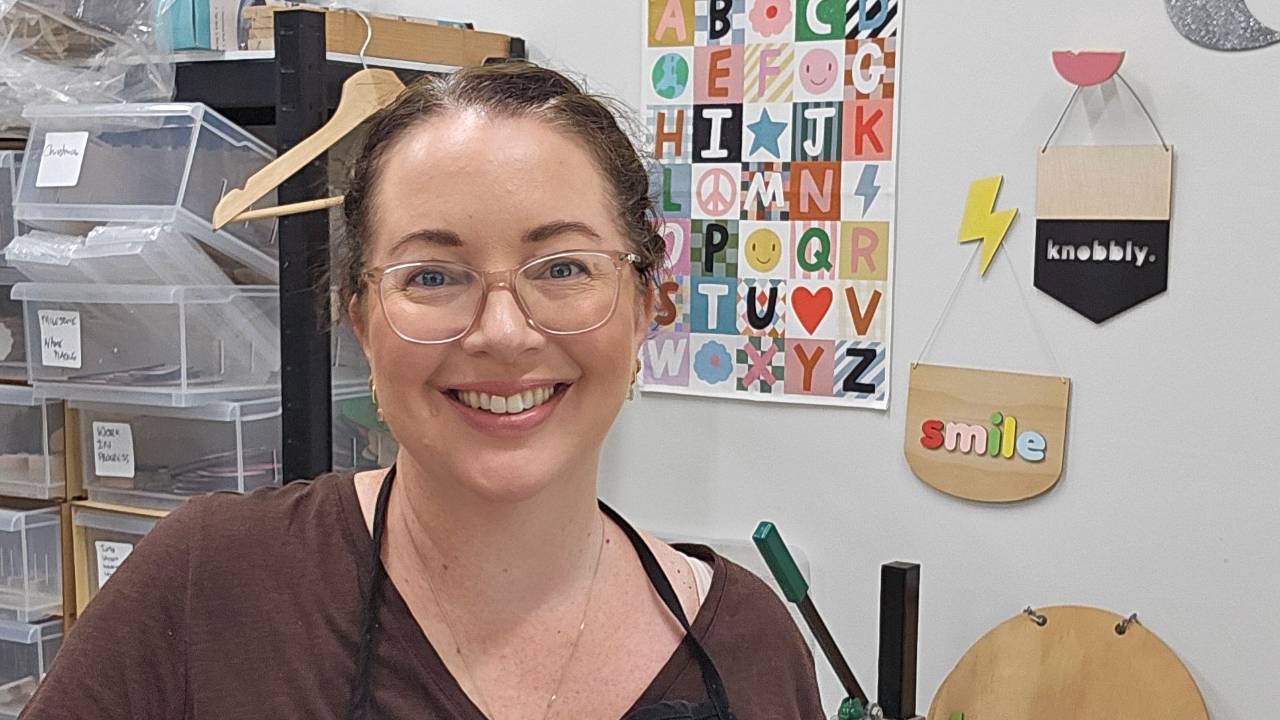
A few weeks ago, one of our longtime Inner Circle members posted a question in the group that stopped me in my tracks. Her name is Chantal, she's the founder of Oh Color Me, and her business is growing so fast it's almost a problem. I read her post and thought, "I need to talk to her." Because Chantal is standing at exactly the fork in the road where a fast-growing business either turns into something sustainable, or turns into debt, exhaustion, and 5 a.m. wake-ups where you're staring at the ceiling wondering how you're going to pay the bills.
I asked her to come talk it through with me on the podcast, because I knew her story would help more people than just her. Money problems feel personal. Admitting you're scared about cash flow, even when your sales are climbing, can feel like lifting your skirt in public. But it's one of the most common places product-based business owners get stuck, and almost nobody talks about it out loud. So I want to thank Chantal for being brave enough to bring it into the light.
The Business: Small, Simple, and Kind of Magic
Oh Color Me makes mini coloring books. Not the big, elaborate adult coloring books full of intricate detail, the opposite in fact. Chantal's daughter was diagnosed with autism at two (she's eight now), and not long after, Chantal and her husband both discovered they had ADHD too. That's when Chantal understood why big coloring books had always stressed her out instead of relaxing her. They were overwhelming. Too much decision-making, too much detail, no peace in them at all.
So she built the thing she actually needed: small books where an image takes ten or fifteen minutes to finish. No overwhelm before you even pick up a pencil. Just "the apple is green or red," and a finished page that makes you feel calm and accomplished.
It turns out a lot of people needed that too. Kids who won't color anything else. Teens. Adults. 60% of her buyers, actually. Parents buying for aging parents with dementia or early-stage Alzheimer's. One customer posted recently that the books had visibly changed her daughter's anxiety and depression. These aren't just coloring books, they're a tool. And Chantal built it almost by accident, out of her own life.
Two years in, the business hit six figures in its first year of selling the coloring books, and this year it might double. Most of that growth is wholesale, sold heavily through Faire, with a genuinely excellent 66% reorder rate from retailers.
By every outward measure, Chantal is winning.
"I Hit Six Figures and I'm Still Poor"
Here's the part nobody posts about on Instagram. Chantal isn't paying herself. At all.
She told me about a conversation with her mom, who mentioned some clothes Chantal should check out. Chantal said she didn't have the cash. Her mom was confused. "I thought your sales were up, I thought you were doing well." And Chantal had to explain:
The company made six figures. She did not. Every dollar coming in was going right back into the business, mostly into inventory.
This is one of the most common traps in a fast-growing product business, and it will absolutely make you feel like you're doing something wrong even when you're not. You look at your bank statement, you look at your growing sales, and you still can't buy yourself a new pair of jeans. That gap between "the business is thriving" and "I personally have no money" is where a lot of business owners quietly burn out.
The Real Numbers
This is the part I really want every product-based business owner to sit with.
Chantal's net profit was running around 6% of sales last year. In a product-based business, the floor needs to be 10%. A good result is 15%. A great result is 20%. At 10% profit, you'd need to do a million dollars in sales just to pay yourself $100,000. At 15%, that same million gets you $150,000 to split between salary and reinvestment.
Here's the twist: when we actually looked at her most recent stretch of months, Chantal was running at 20% net profit. Genuinely excellent. The problem wasn't profitability. The problem was that every bit of that profit was getting reinvested into inventory as fast as it came in, because the growth has been so recent and so fast that she hadn't caught up to it yet. Her 20% net profit, at her sales goal, was exactly the $60,000 salary she said she wanted. The math already worked. She just hadn't been able to feel it yet.
The Decision in Front of Her
Chantal's actual question was about inventory. To handle the demand coming from a wholesale trade show, a big Faire event, and some unexpected viral traction, she was looking at needing to order 15,000 books, somewhere around $40,000–$50,000 she didn't currently have.
She had a business line of credit already, barely used, and could likely get it increased. So the obvious move seemed to be: borrow the money, buy the inventory, keep growing.
Here's where I stopped her.
An operating line of credit is the wrong tool for this.
Banks treat a line of credit like a credit card — they want to see the balance go up and back down to zero. What Chantal needed the money for was permanent: raising her baseline inventory level to support a higher run rate of sales. That money isn't coming back out. It just sits there, on shelves, as what my friend Ciara Stockland calls "cash on pallets."
If you fund a permanent need with a revolving line of credit, the balance never goes back to zero. It just sits maxed out, and eventually the bank notices and terms it out on you anyway. But now on their timeline, not yours.
Ciara is a longtime friend of mine and a Profit First Certified coach who has spent years specializing in exactly this problem: inventory-based businesses that are growing fast enough to look successful on paper while quietly running out of cash. She opened her first store back in 2006, later built and sold the first wholesale subscription box for boutique retailers, and now runs a coaching program called Inventory Genius that teaches product-based business owners how to turn their inventory into profit instead of a cash trap.
If Chantal needed to borrow for inventory, I told her, it needed to be a proper capital loan. A fixed amount, a fixed term, a real repayment schedule. Even loaning the money to herself, personally, at a set interest rate with a five-year term, would beat financing growth through a line of credit that never gets a chance to rest. I learned this one the expensive way in my own first business, when I hit a million dollars in sales in year two and ended up with $150,000 of revolving debt that never stopped feeling urgent.
But the bigger thing I wanted Chantal to hear was this: she doesn't have to borrow at all.
The Real Fix Was Never the Loan
Here's what actually came out of the numbers. Chantal's profit per unit was uneven in a way she hadn't fully clocked:
- Direct-to-consumer: about $5.85 profit per unit
- A retailer's first wholesale order: about 55 cents per unit
- A retailer's repeat wholesale order: about $3.66 per unit
That first wholesale order, the one that includes a free display worth $30 and eight free sample books worth another $72 in retail value, was barely profitable once you factor in software, fees, and overhead. Chantal wasn't losing money on purpose. She'd built an incredibly generous offer to win new retail accounts, back when winning accounts was the hard part of the business. But she's past that now. New accounts aren't the problem anymore. Profit is.
So instead of borrowing to feed an underpriced offer at a faster rate, the better first move was fixing the offer itself:
- Reframe the wholesale starter kit. Instead of $180 for the display and free books, price it as a $220 "starter pack" that clearly lists the value of everything included. Retailers aren't tracking what you charged six months ago. They're not doing the math. They're saying yes to an opportunity that's been pitched to them.
- Raise the reorder minimum. Chantal's minimum wholesale order was well under what most wholesalers require — industry wisdom says don't go below $100. Hers was closer to $65-75.
- Reconsider free shipping on the direct-to-consumer site. At a $40 free-shipping threshold, Chantal was quietly eating $11–12 in shipping cost on every order, on a product with a low average order value. That's low perceived value for the customer and a real, unrecoverable cost for the business.
None of these require a bank. All three protect the profit margin Chantal already has instead of scaling a leaky version of the business faster.
Make One Change at a Time
My advice to Chantal wasn't to do everything at once. It was the opposite: pick the highest-impact change, make it, let it settle, then move to the next one. Wholesale is 70% of her revenue, so that's where the money is. Fix the starter pack offer first. Then raise the reorder minimum. Then deal with free shipping. Meanwhile, she has real runway (probably 60 days) to get a capital loan approved if she still needs one, without rushing into an operating line that will quietly become a trap.
Chantal isn't in trouble. She has the problem most business owners wish they had: she can't keep her own inventory in stock.
That's a good problem. But good problems can still turn into bad ones if you finance them with the wrong tools, or price your offer for the stage of business you used to be in instead of the one you're in now.
If you're staring at strong sales numbers and an empty personal bank account, you're not doing anything wrong. You're just at the point where it's time to stop asking "how do I get more people to buy?" and start asking "how do I make sure I get paid when they do?"
RELATED LINKS:
Chantal's mini coloring books are available at ohcolorme.com, on Amazon in Canada, and through retailers found via the site's store locator.
Ciara Stockeland: https://www.ciarastockeland.com/
What Every Store Owner Needs to Know About Business Debt https://www.thesocialsalesgirls.com/blog/what-every-store-owner-needs-to-know-about-business-debt-episode-267
Why More Sales Isn't Fixing Your (ecommerce) Cash Flow Problem https://www.thesocialsalesgirls.com/blog/why-more-sales-isnt-fixing-your-cash-flow-problem-episode-318
How to get control of your $ https://www.thesocialsalesgirls.com/blog/how-to-get-control-of-your-episode-158